Dear America,
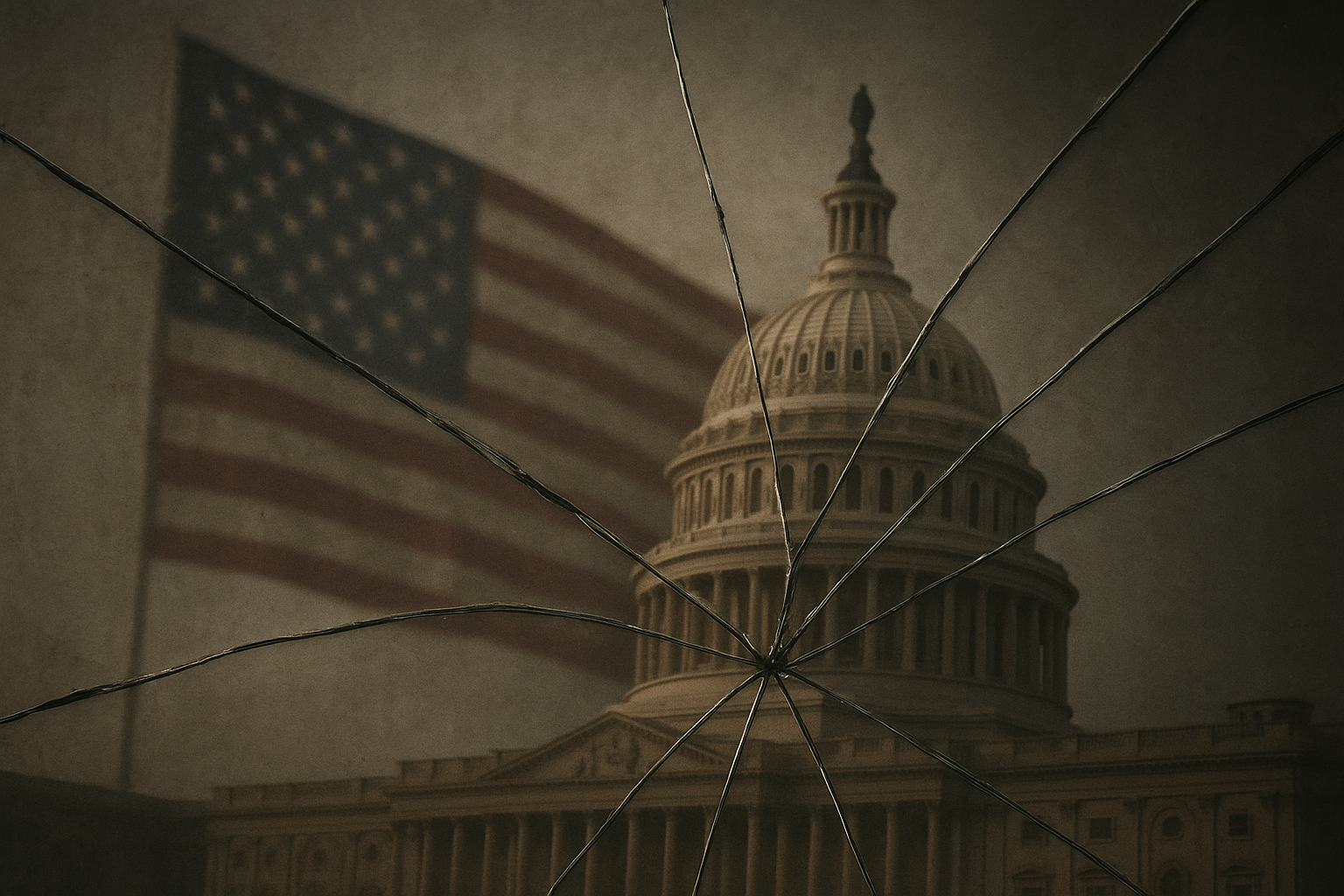
I write this letter with a deep sense of urgency, for I believe America stands on the precipice of losing the very democracy that once set us apart from the rest of the world. I’ve raised these concerns in previous writings, and in this letter, I wish to expand on what I mean.
Our Constitution, an enduring testament to the principles of liberty and justice, faces unprecedented challenges. The core structures and ideals upon which it was built—representative government, the separation of powers, and a commitment to the common good—are under increasing strain. We face not only the unraveling of our democratic institutions but also the erosion of the civic integrity that has long sustained our Republic.
This may sound alarmist to some. Yet respected historians and scholars—those best equipped to speak on the fragility of democratic systems—have been issuing stark warnings about the erosion of American democracy since 2017. Their analyses draw on centuries of history, comparing our current moment to other nations where democracies faltered and authoritarian regimes took hold. These voices are not alarmists but experts who recognize the warning signs of decline from past failures.
It’s equally important to acknowledge those historians and scholars who offer a more optimistic view, suggesting that the challenges we face today are not necessarily signs of imminent collapse, but part of democracy’s ongoing evolution. At the end of this letter, I include a list of works from both perspectives. I urge you to explore them, draw your own conclusions about the path we’re on, and reflect on the urgency of the challenges before us.
History teaches us valuable lessons—lessons that reveal how the same signs we now witness in America once appeared in past democracies that crumbled under the weight of their own hubris.
I’m convinced the warning signs are undeniable. Yet too many are willing to forget those lessons or assume that our democracy, when stretched, will inevitably reshape itself. But even the strongest band can only be stretched so many times before it snaps.
Before we draw conclusions, let us consider the following six warning signs not as isolated phenomena, but as recurring patterns in our history—patterns that, at times, have heralded democratic decline. We’ve faced each of these challenges before and, at various moments, found ways to overcome them. What makes this moment different, however, is that for the first time in our history, all six are happening at once. Each one—polarization, executive overreach, erosion of the rule of law, civic distrust, distortion of truth, and economic inequality—has appeared in different eras, but never together, never so deeply intertwined. The result is a convergence that compounds their effects and places our democracy in unprecedented danger. This time, the strain may not simply test our institutions; it may break them.
Six Signs of Democratic Decline
I. Political Polarization and Fragmentation
America has long wrestled with political polarization. The Federalist and Anti-Federalist debates shaped our founding; the Civil War was fought over sectional divides; and in the late 19th and early 20th centuries, class conflicts often played out along deeply partisan lines. At various points, we have managed to bridge these divides through legislation or national crises that forced us to unite.
Historical Context: Consider the Civil War, which was precipitated by the deepening polarization between North and South. The country split along ideological lines regarding slavery, states’ rights, and economic systems. However, the war’s conclusion led to the Thirteenth, Fourteenth, and Fifteenth Amendments, which sought to unify the nation and offer civil rights protections to formerly enslaved people. Even though polarization lingered, this monumental shift represented an attempt to heal the rift. The nation worked to narrow the divide and restore the union.
Why It’s Different Now: Today, the fragmentation has been amplified by social media algorithms that prioritize extremism. A study by the Pew Research Center shows that since the early 2000s, ideological divides between Republicans and Democrats have grown dramatically. By 2021, 90% of Republicans and 92% of Democrats viewed the opposing party negatively—up from 58% in 1994. This is not just division; it’s entrenched tribalism, where compromise is viewed as betrayal and fellow citizens are seen as “the enemy.” We no longer bridge the divide; we widen it and set fire to the bridges.
II. Concentration of Power
Throughout our history, we’ve experienced moments of executive overreach, but in the past, our system of checks and balances usually prevented any one branch of government from consolidating too much power. Presidents like Andrew Jackson and Franklin D. Roosevelt expanded executive power, but Congress and the judiciary still held their ground.
Historical Context: During the New Deal era, Roosevelt expanded the executive’s role in response to the Great Depression. However, the courts eventually intervened, striking down several New Deal measures they deemed unconstitutional. Roosevelt’s subsequent attempt to pack the Supreme Court in 1937 was met with fierce resistance from Congress, the judiciary, and the public. It ultimately failed, ensuring that the judiciary maintained its independence.
Why It’s Different Now: Today, the executive branch has amassed unprecedented power. Under both Presidents Obama and Trump, there were significant concerns about executive overreach. Obama’s use of executive orders, such as the DACA initiative and the Clean Power Plan, faced intense legal challenges but went largely unchecked by Congress. Trump’s use of executive orders—particularly those related to immigration (e.g., the Muslim travel ban) and border wall funding—was similarly controversial, with little response from Congress to rein in such power.
More concerning, both presidents pushed the boundaries of executive power with little real consequence. Congress, instead of asserting its authority, often capitulated. Moreover, Trump has blatantly refused to adhere to court decisions—such as ignoring federal rulings against his immigration policies. By placing the executive branch above the other two branches, Trump has weakened the Constitution’s framework.
III. The Decline of the Rule of Law
The principle of the rule of law has been challenged repeatedly throughout our history. From the Alien and Sedition Acts to the internment of Japanese Americans during World War II, there have been moments when the government bypassed the law for what it perceived as the greater good.
Historical Context: The Alien and Sedition Acts of 1798, passed under President John Adams, criminalized dissent against the government, violating the First Amendment’s guarantee of free speech. While controversial, these acts were eventually repealed and deemed an overreach by Congress. Similarly, during World War II, Japanese-American citizens were forcibly relocated and interned in camps, a gross violation of their civil rights. It wasn’t until 1988 that President Reagan signed the Civil Liberties Act, which formally apologized and provided reparations.
Why It’s Different Now: Today, we see similar violations of the rule of law, but with fewer mechanisms for accountability. The erosion of civil liberties during the War on Terror, particularly under the Patriot Act, expanded surveillance powers without oversight. Trump’s blatant disregard for judicial rulings—such as dismissing a federal court’s decision on border wall funding—illustrates how the rule of law is undermined by executive authority. His attacks on the First Amendment, targeting journalists and calling for restrictions on protestors, further erode civil liberties and undermine constitutional protections.
IV. Erosion of Civic Responsibility and Trust
Americans have always been a deeply engaged citizenry—whether through voting, community involvement, or participation in social movements. However, when trust in government falters, Americans have historically rallied to restore accountability. The Watergate scandal, for example, undermined public trust, but citizens demanded accountability, leading to reforms and a renewed commitment to transparency.
Historical Context: The 1960s and 1970s saw a marked decline in trust toward institutions, particularly after the Vietnam War and Watergate. The Watergate scandal resulted in the resignation of President Nixon and led to reforms like the Freedom of Information Act amendments and new campaign finance laws. Citizens united to defend their right to authentic representation, ensuring greater transparency and public accountability.
Why It’s Different Now: Today, however, trust in government has eroded to a degree not seen since the Watergate era. A 2023 Gallup poll found that only 20% of Americans trust the government to do what is right, the lowest level of trust since Gallup began tracking in the 1950s. Rather than prompting reform, this distrust has led to a political environment where citizens retreat into ideological echo chambers, leaving a vacuum in civic engagement. Instead of reform, distrust is often replaced by cynicism and disengagement.
V. The Distortion of Truth
Throughout our history, attempts to control or distort the truth for political gain have been met with resistance, often from within the very institutions that perpetrated them.
Historical Context: The Red Scare and McCarthyism in the 1950s is a prime example of how distorted truth undermined American values. Senator Joseph McCarthy falsely accused individuals of being communist sympathizers, destroying careers and reputations. It wasn’t until Edward R. Murrow’s broadcasts and legal challenges that McCarthy’s tactics were discredited.
Why It’s Different Now: Today, the distortion of truth is not the work of a single individual but a systemic issue fueled by partisan media and social media. “Alternative facts” and conspiracy theories are rampant, and misinformation about public health, elections, and other issues is often amplified by political leaders. The spread of misinformation is exacerbated by modern propaganda techniques, which use social media algorithms to spread false narratives far and wide.
The decline in critical thinking, fueled by digital distractions and political polarization, also plays a crucial role in this epidemic of misinformation. According to a 2022 National Assessment of Educational Progress, only 33% of high school seniors are proficient in reading comprehension—a skill central to analyzing news and forming educated opinions. Without these skills, readers are swayed by headlines and emotional content, exacerbating the spread of misinformation.
VI. Economic Inequality and Social Unrest
Economic inequality has always been a feature of American life, but in the past, when inequality reached extreme levels, it sparked widespread movements for change.
Historical Context: The Gilded Age saw massive wealth concentration in the hands of industrialists like John D. Rockefeller and Andrew Carnegie, leading to widespread social unrest. The subsequent Progressive Era saw reforms such as child labor laws, trust-busting, and Social Security. The New Deal, in response to the Great Depression, expanded government intervention to address income inequality, creating a safety net for the unemployed and elderly.
Why It’s Different Now: Today, economic inequality is at levels not seen since the Gilded Age. According to the Economic Policy Institute, the top 1% of households control 39% of the nation’s wealth, while the bottom 90% control just 27%. The widening wealth gap is breeding discontent, particularly in communities left behind by globalization and technological change. This discontent exacerbates political polarization and social unrest, leading to greater instability.
Conclusion
The signs are clear and unmistakable. America has faced these challenges before and found ways to renew its democracy and restore the principles that made this nation strong. Yet today, these threats run deeper, more entrenched and intertwined than ever before, striking at the very fabric of our Republic. Each force now amplifies the others—polarization fuels disinformation, disinformation erodes trust, distrust enables executive overreach, and so on—creating a compounding effect without precedent in our history. This convergence makes the present moment uniquely perilous for the survival of our democracy.
A Call to Action: Step Up, Protect Our Democracy
While this convergence makes the present moment uniquely perilous, it also presents an opportunity: the very urgency of our situation calls us to action. If we rise together to meet these challenges, we have the power to rebuild our democratic foundations, as we’ve done before, and emerge stronger than ever. We must not let something as special as our democracy die.
America’s democracy is not like others. It is the product of a bold vision that transcends borders and defies history. Born from the Enlightenment ideals of liberty and equality, it has become a beacon of hope for millions. What makes American democracy exceptional is its unwavering commitment to individual rights, its system of checks and balances, and its ability to evolve through reform, not revolution.
This nation was founded on the belief that all people, regardless of origin, have the right to life, liberty, and the pursuit of happiness. From the outset, our Constitution was revolutionary—one of the first to explicitly protect individual freedoms from the tyranny of the majority. These principles set America apart, creating a political structure where power is shared, and where the people—not the government—remain the ultimate authority.
While no democracy is perfect, America’s resilience has been in its ability to correct course. Our system has allowed us to address our flaws—from the abolition of slavery to the ongoing fight for civil rights. The movements that have shaped our history—women’s suffrage, the Civil Rights Movement, LGBTQ+ rights—show that American democracy can correct its course.
But these principles are now under threat. Polarization, executive overreach, and the distortion of truth threaten the balance of power. We cannot afford to sit idly by while our institutions falter.
Democracy is not guaranteed. It must be fought for, preserved, and, when necessary, restored.
Together, we can restore balance. Together, we can reinvigorate this nation’s commitment to freedom, justice, and the rule of law.
When united, we are unstoppable. When we act with resolve, we are a force no tyranny can withstand.
With unwavering commitment to liberty,
Patriotic Quill