
AI-Generated Ethics and Bias Analysis of Major U.S. Media
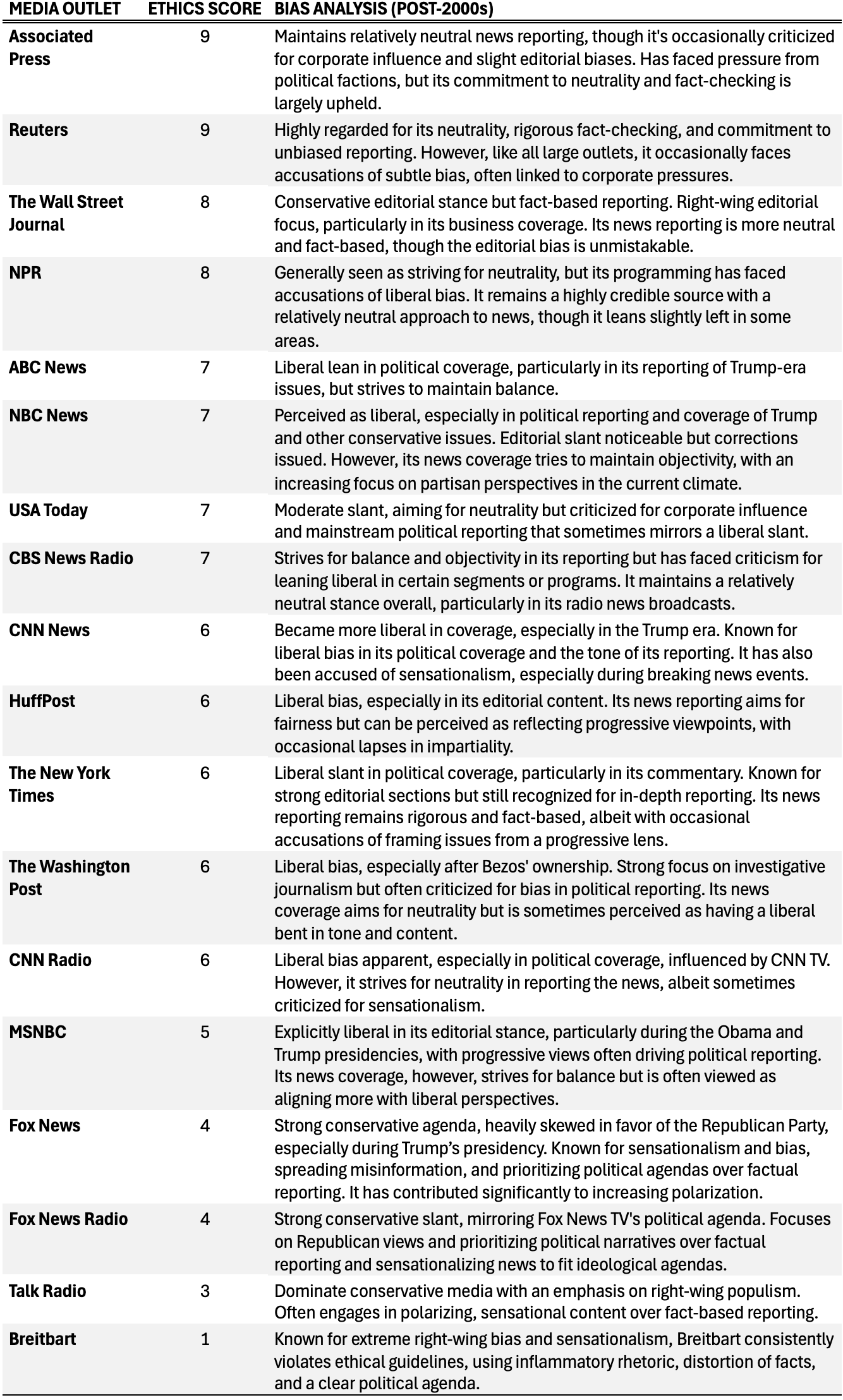
This table provides an AI-generated analysis of major media’s adherence to common ethical journalistic guidelines and biases based on a review of publicly available information and past controversies.
The Ethics Score (out of 10) represents how well the outlet adheres to ethical journalistic principles, based on the degree of bias and incidents where ethical standards have been bent or broken. Higher scores reflect greater adherence to neutrality, transparency, and accuracy in reporting, while lower scores indicate a greater tendency toward sensationalism, partisanship, or ethical violations. Adherence to these principles maintains the media’s role as a trusted source of information in a democracy.
Key Observations:
- Associated Press and Reuters stand out as two of the most respected and neutral news outlets globally. They maintain high standards for accuracy, fairness, and impartiality. Despite occasional criticism over minor biases, they are trusted for providing fact-based reporting.
- Network Media (NBC, CNN, Fox News, etc.): These outlets show a clear trend toward polarization, with Fox News and Talk Radio having a strong right-wing focus, while CNN and MSNBC lean more left-wing. NBC and ABC aim for balance but often show a liberal slant.
- Newsprint Media (New York Times, Washington Post, Wall Street Journal, etc.): These print outlets continue to maintain strong editorial positions with a liberal bias (e.g., NYT, WP) or conservative focus (e.g., WSJ), but their news reporting is generally more neutral.
- Radio Media (Fox News Radio, NPR, Talk Radio, etc.): Radio outlets, especially Talk Radio and Fox News Radio, are highly partisan, promoting right-wing narratives. NPR, while often criticized for liberal leanings, upholds neutrality in news reporting.
- News websites (Breitbart and HuffPost): Breitbart has a clear strong right-wing focus, while HuffPost leans more left-wing.